A Picnic
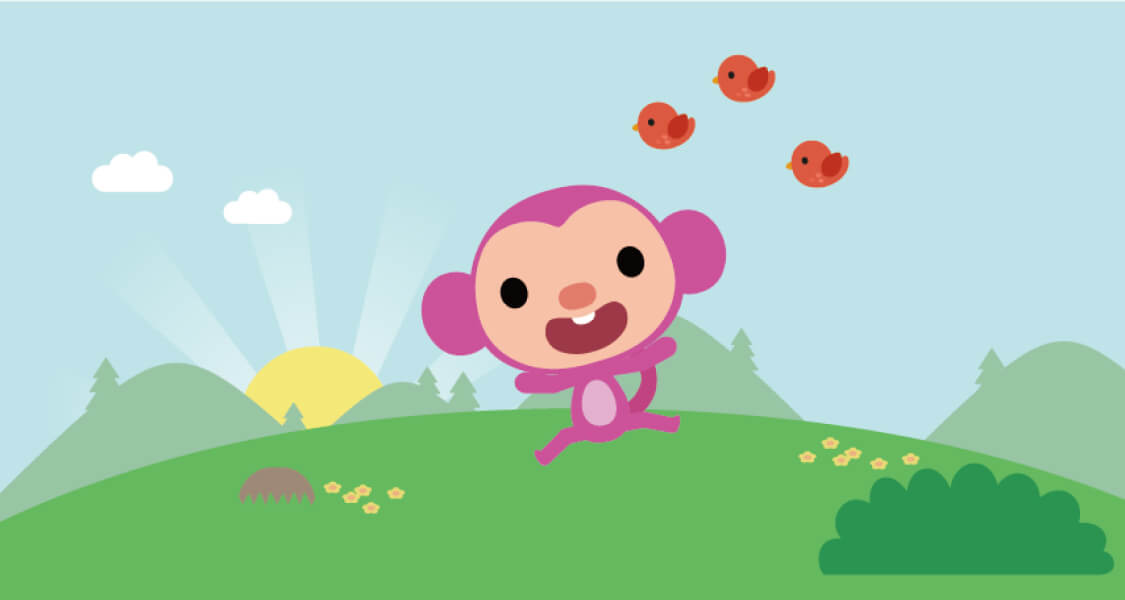
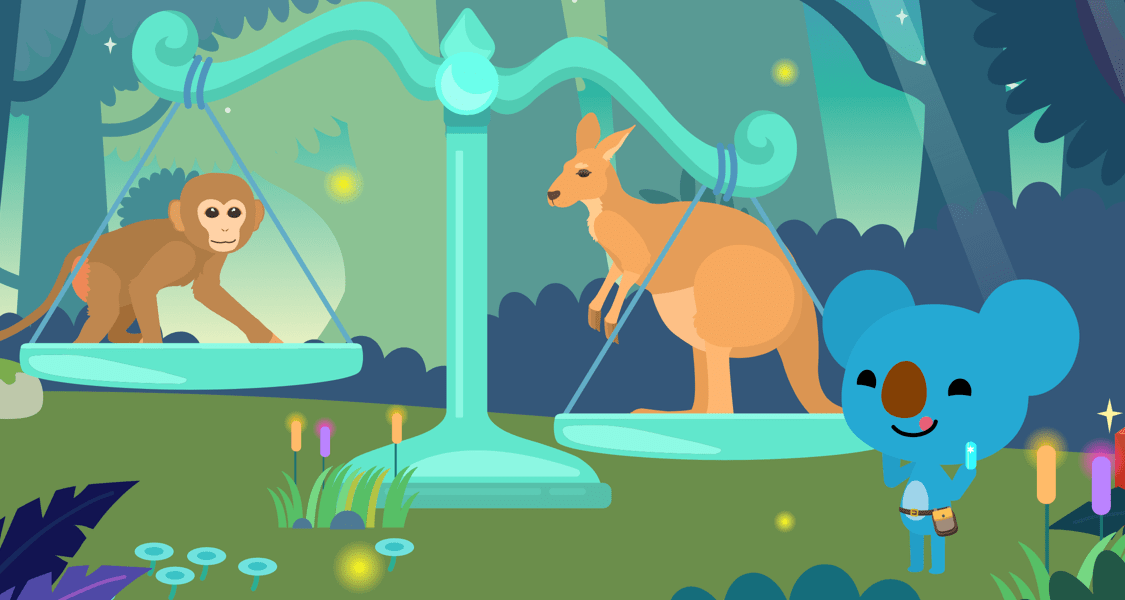
Greet and familiarize with the characters Koby Koala and Momo Monkey.
Vocabulary: morning, afternoon, evening, diamond
Sentence: What's your name? My name is ...
In the Classroom
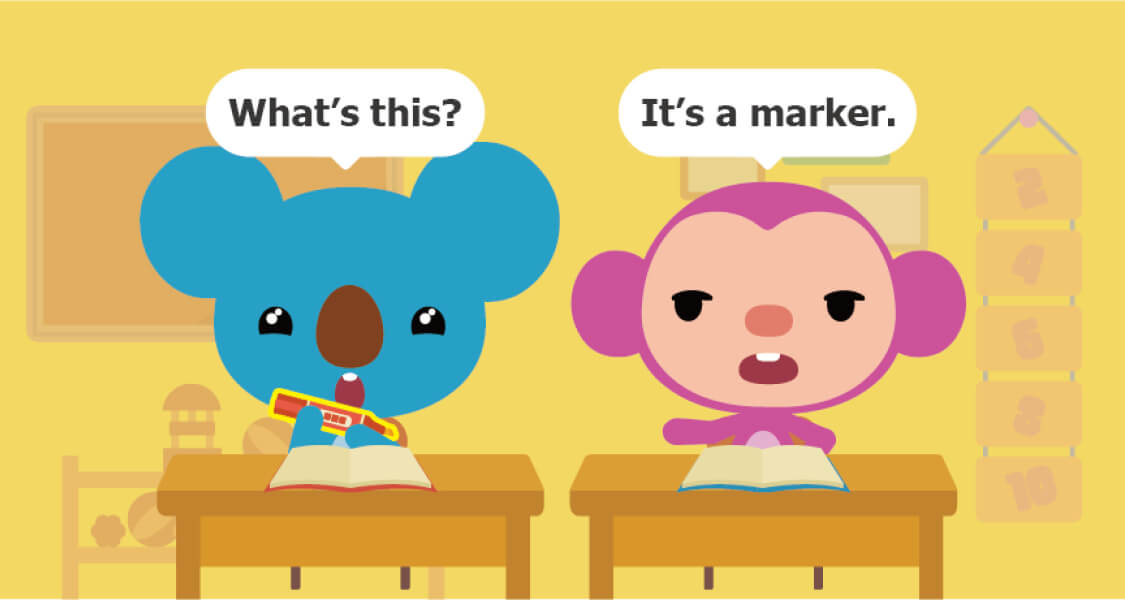
Identify three stationeries and respond to information questions "What's this?" with "It's a ..."
Vocabulary: marker, pencil, book
Sentence: It's a (...).
Momo the Magician
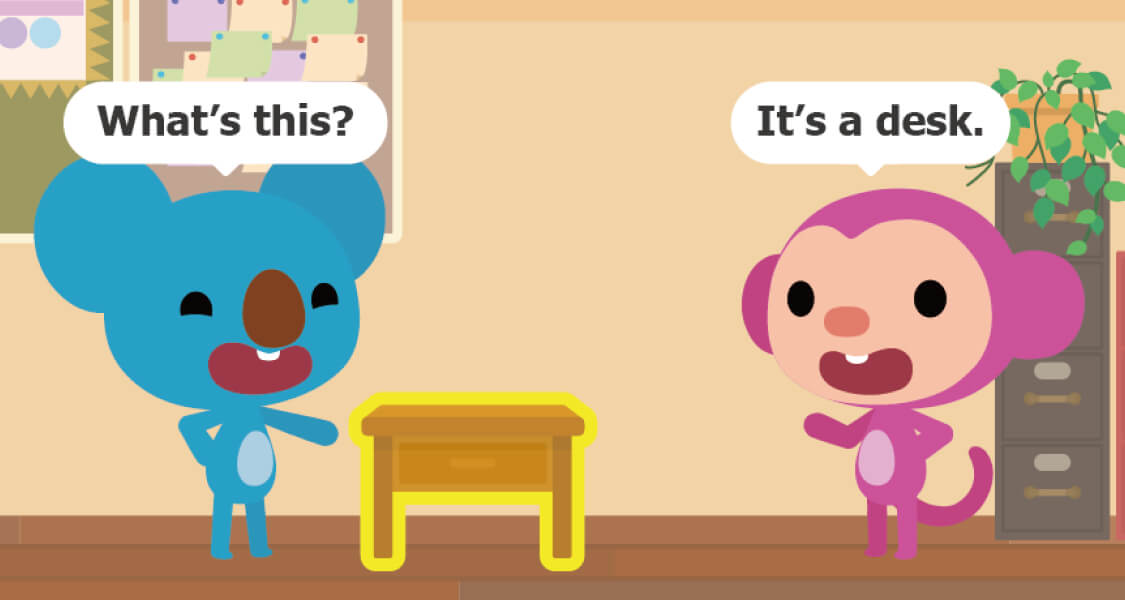
Identify classroom facilities and stationeries. Learn to describe objects nearby and far away.
Vocabulary: desk, chair, schoolbag
Sentence: What's this? what's that? It's a (...)
Koby the Artist
Learn to distinguish singular and plural forms of nouns.
Vocabulary: markers, books, pencils, desks, chairs, schoolbags
Sentence: This is a (book). These are (...). What are these? They are (...).
By the end of level 1, students will be able to:
- 1Introduce oneself, family members and friends
- 2Describe locations, weather, and hobbies
- 3Describe weather and locations
- 4Use simple imperative sentences
Sample Lessons from This Level
Koby the Plumber
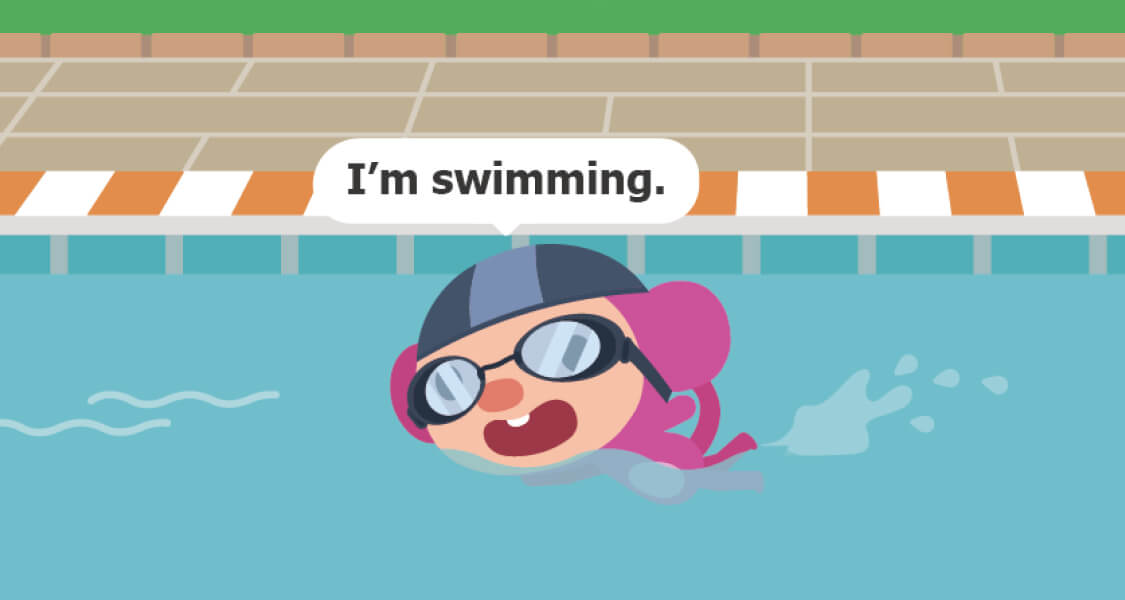
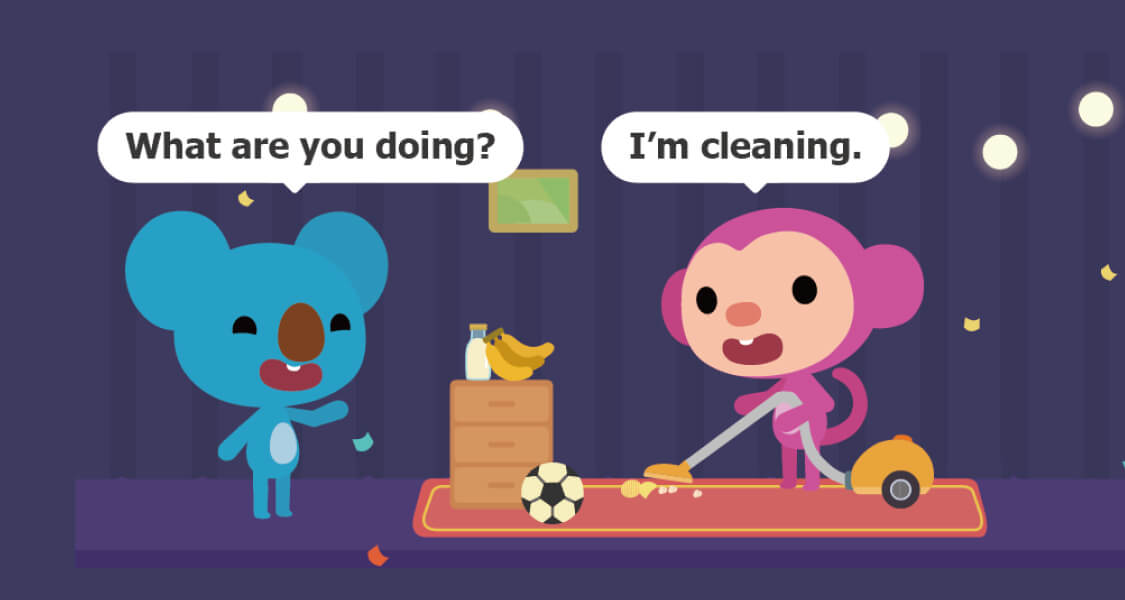
Use present continuous tense to describe current action.
Vocabulary: /
Sentence: (I) am (running).(He) is (running).(We) are (running).
What's Koby Doing?
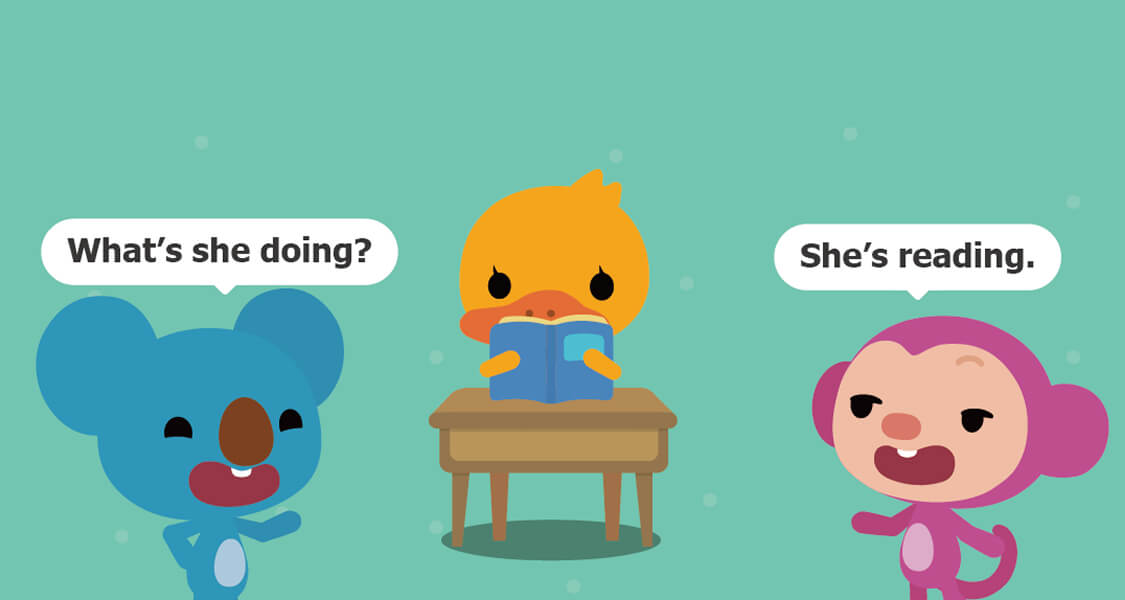
Identify five verbs and respond to information questions about current action.
Vocabulary: sleep, eat, drink, read, write
Sentence: /
Koby the Little Chef
Identify three verbs and ask information questions about current actions.
Vocabulary: touch, shoulder, knee, toe, finger
Sentence: Touch + (your eyes).
Koby's Parents in Hawaii
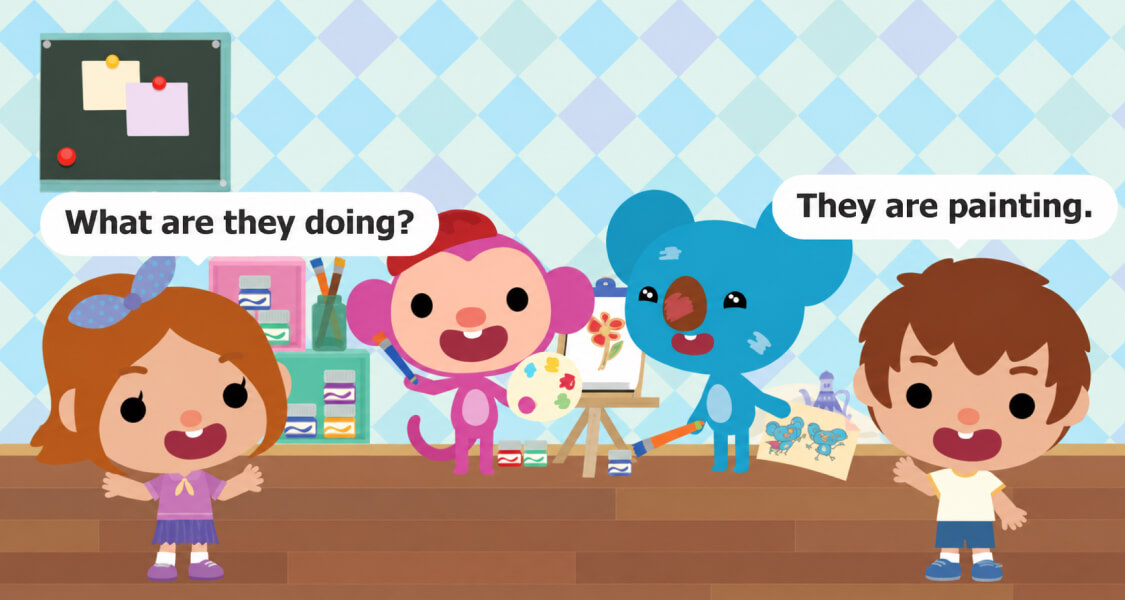
Identify action verbs and ask about what people are doing.
Vocabulary: painting, drawing, coloring, cutting
Sentence: What are they doing? They are (...).
By the end of level 2, students will be able to:
- 1Talk about occupations, describe workplaces and job skills
- 2Ask about prices, bargain, and shop
- 3Express requests and wishes
- 4Describe a trip and plan an itinerary
Sample Lessons from This Level
Messy Koby
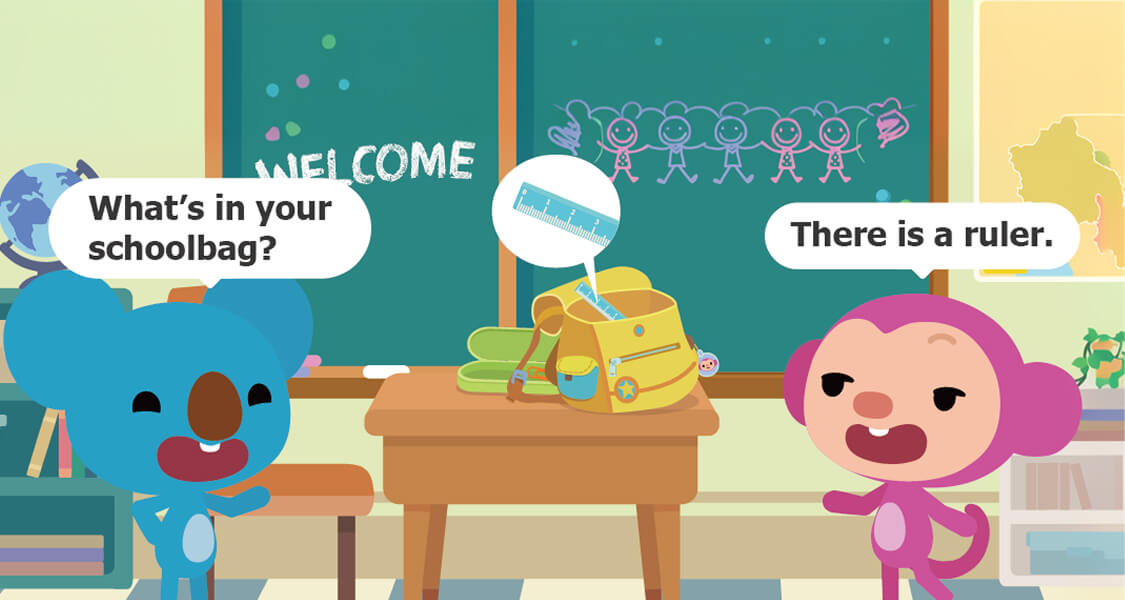
Identify five kinds of device and stationery and acquire the sentence pattern "There be"
Vocabulary: computer, phone, my, your
Sentence: It's my/your (phone).
Classroom Rules
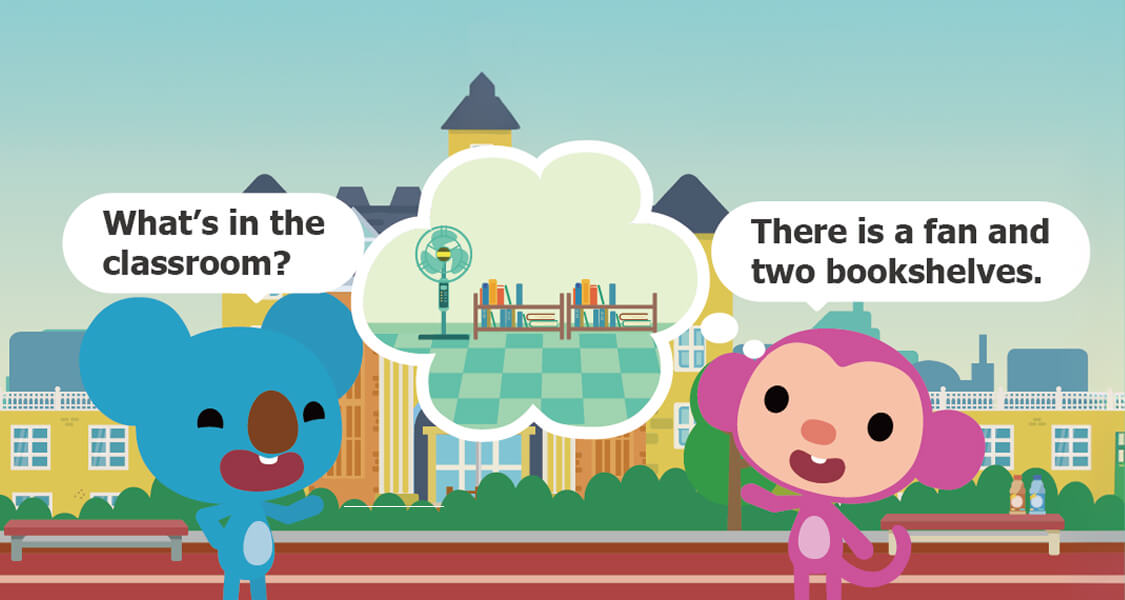
Identify six classroom devices and master proximity agreement in the sentence pattern"there be".
Vocabulary: whiteboard, bookshelf, fan, light, blackboard
Sentence: There is (...) and (...). There are (...) and (...).
Daydreaming
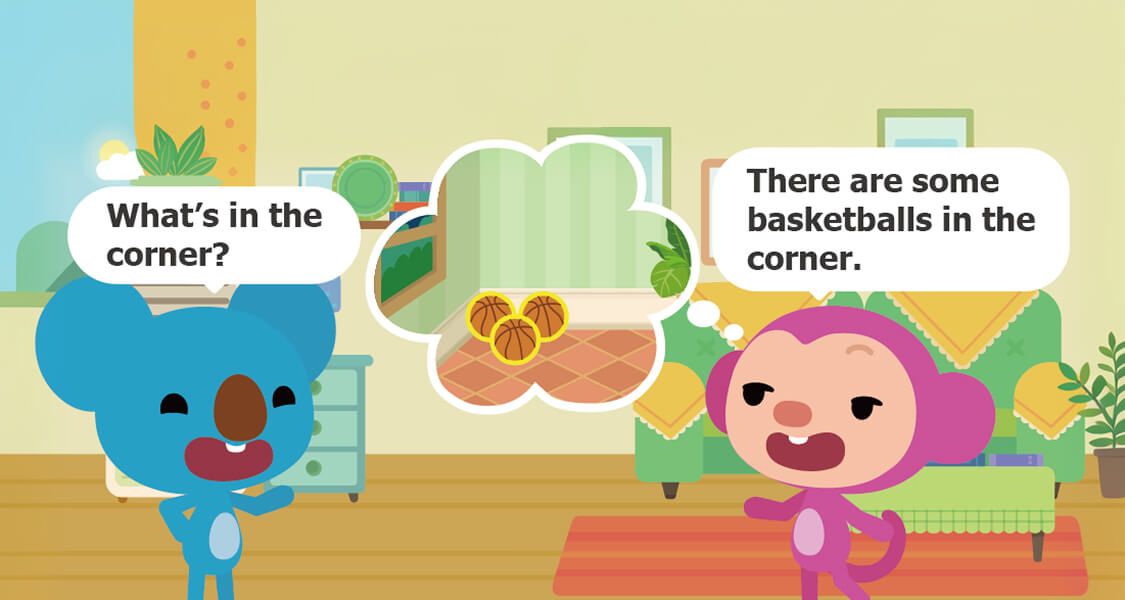
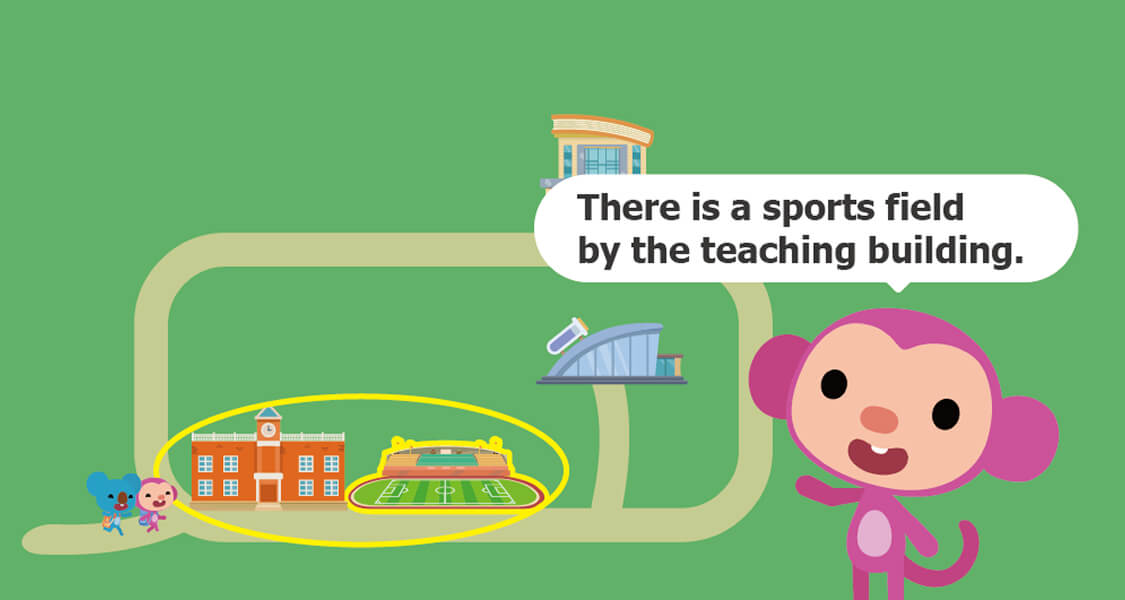
Use prepositions in the sentence pattern "there be" to indicate locations.
Vocabulary: corner, ceiling
Sentence: There is (...) in the corner.
A Letter to Bill
Learn the format of an English letter and write a letter to a friend.
Vocabulary: letter, envelope, stamp, address
Sentence: Dear (Bill), ... Yours, (Koby).
By the end of level 3, students will be able to:
- 1Describe places such as schools, cities, and restaurants
- 2Describe how you feel physically and express your needs
- 3Learn about Western dining etiquette, and learn how to order food and pay the bill correctly
- 4Read and write letters
Sample Lessons from This Level
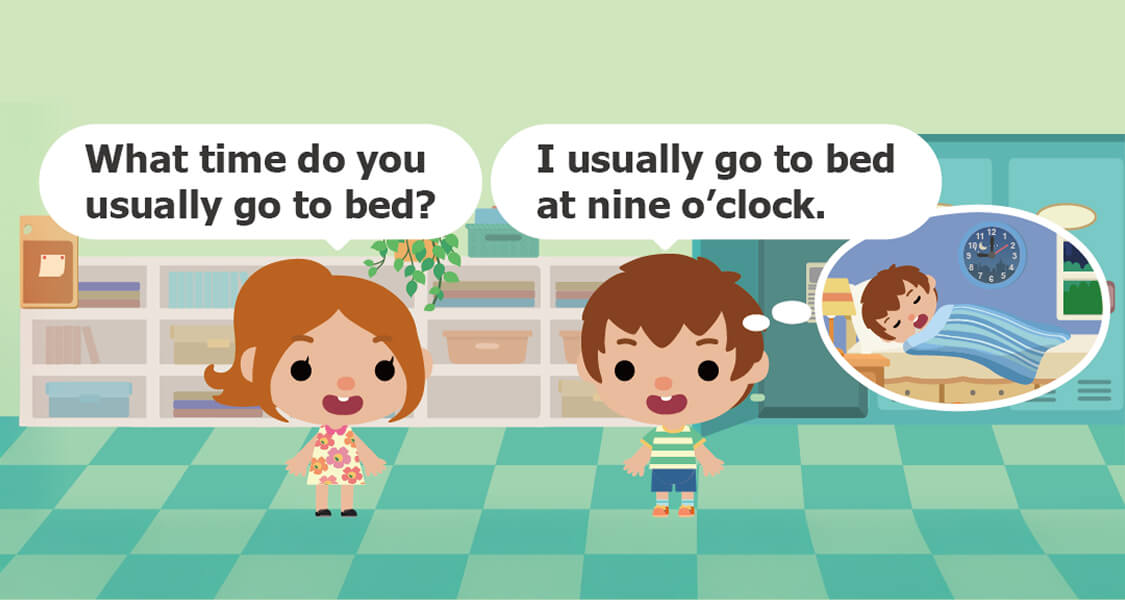
Sleep in
Learn daily activities and use simple present tense to describe daily activities.
Vocabulary: usually, get up, go to bed, eat breakfast
Sentence: (I) usually (go to school) at (8 o'clock).
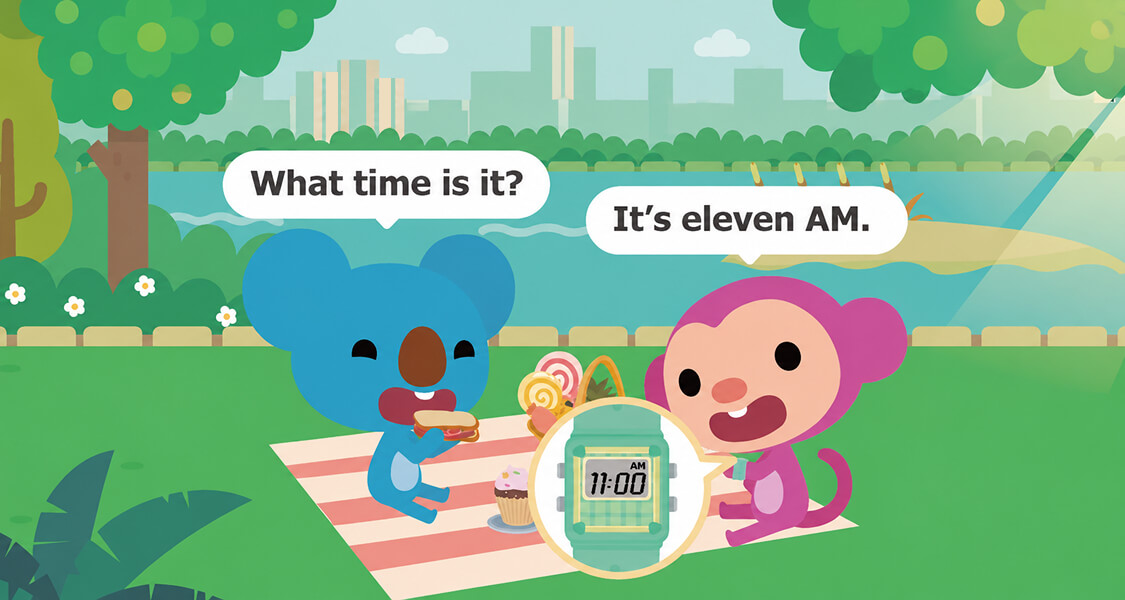
A Day in the Life of Koby
Use 'AM' and 'PM' to describe time.
Vocabulary: AM, PM, midnight, noon
Sentence: What time is it now? It's (10 AM).
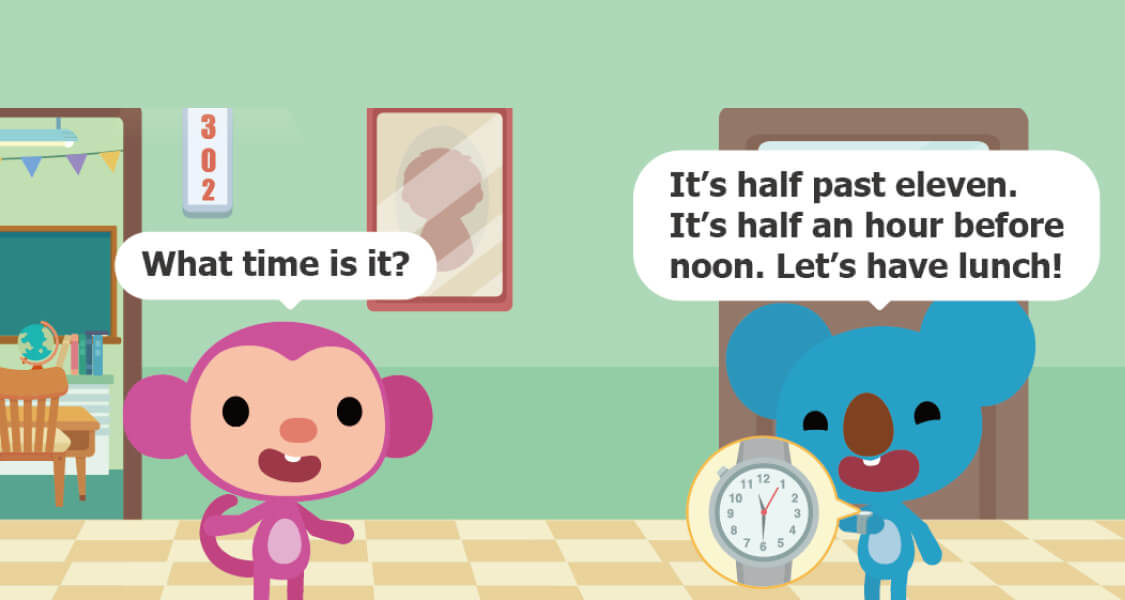
Ten to Five
Use "half" and "to" to tell the time.
Vocabulary: half, go home, go to school
Sentence: I usually go to school at (...).
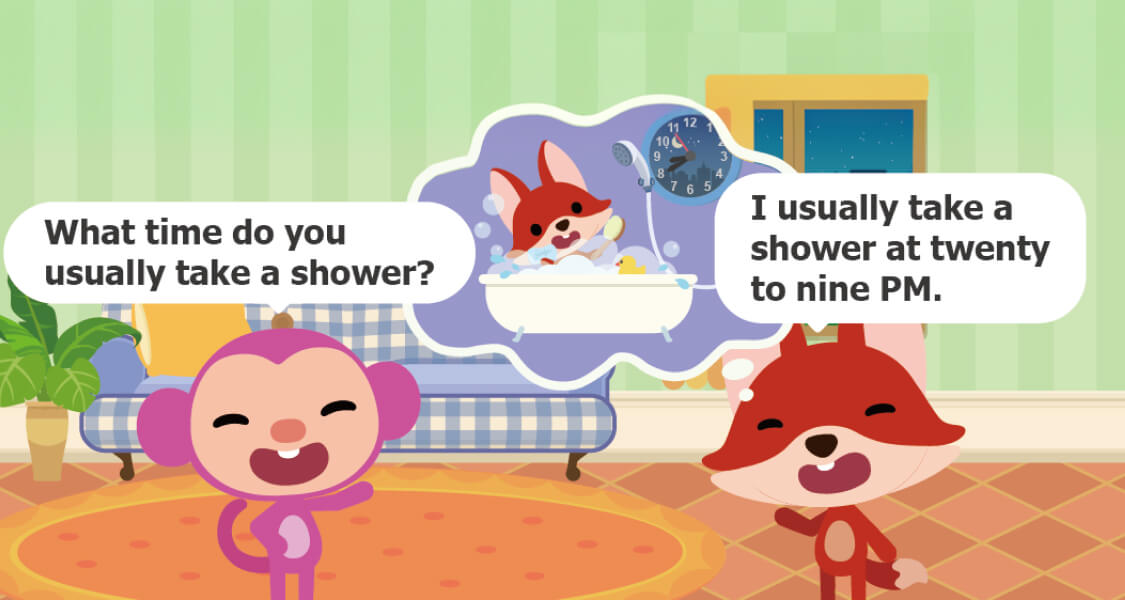
Koby's and Momo's Daily Schedule
Learn daily activities and talk about the time of a specific activity.
Vocabulary: wash one's face, brush one's teeth, comb one's hair, take a shower
Sentence: What time do you usually (wash your face)?
By the end of level 4, students will be able to:
- 1Identify some wild animals and describe their habitats, characteristics, and more
- 2Understand and use linking verb structures to describe feelings and make suggestions
- 3Make comparisons and give opinions
- 4Conduct simple surveys and analyze voting results
Sample Lessons from This Level
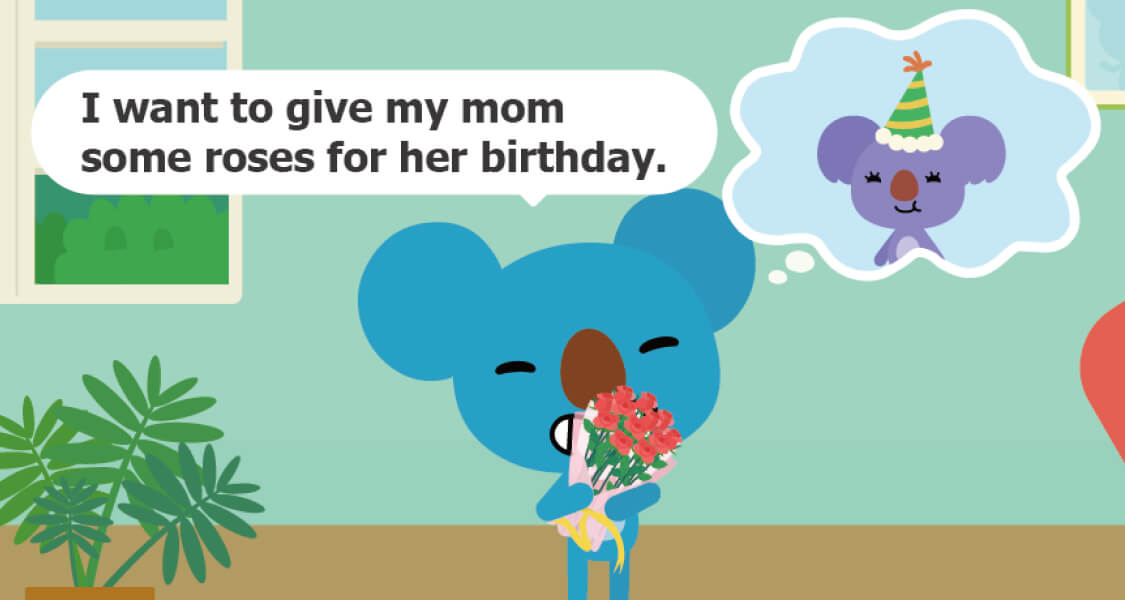
Birthday Gifts
Identify five types of flowers and describe appearances of flowers.
Vocabulary: lily, rose, sunflower, tulip
Sentence: I want to give (some tulips) to (my mom) for her birthday.
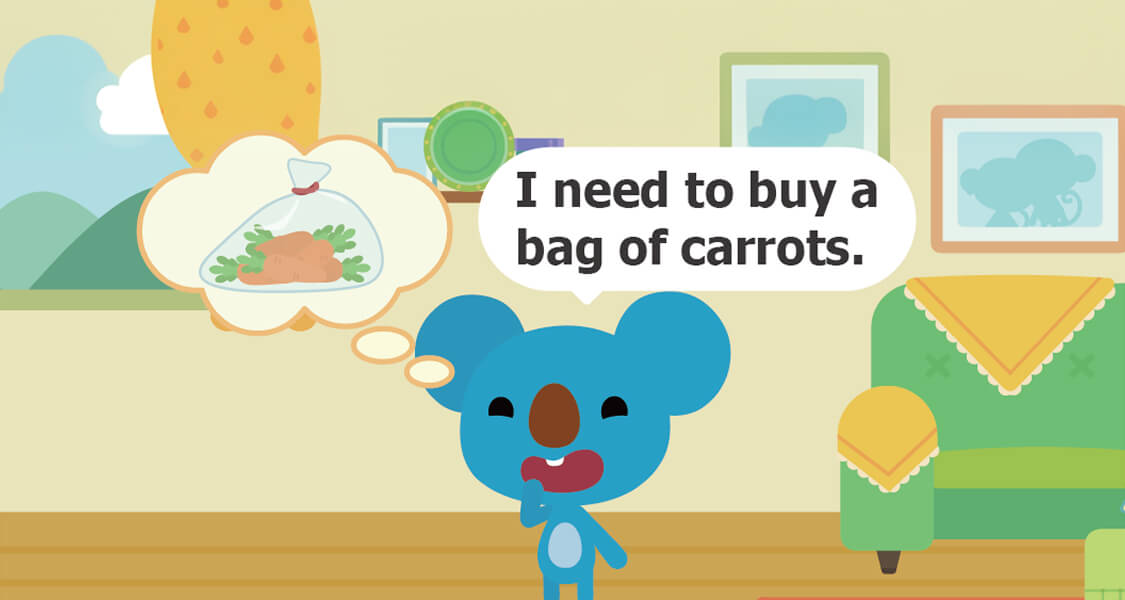
Make a Shopping List
Identify and describe vegetables, learn to use quantifiers of vegetables and fruits.
Vocabulary: carrot, cabbage, lettuce, potato
Sentence: I need to buy (a head of lettuce).
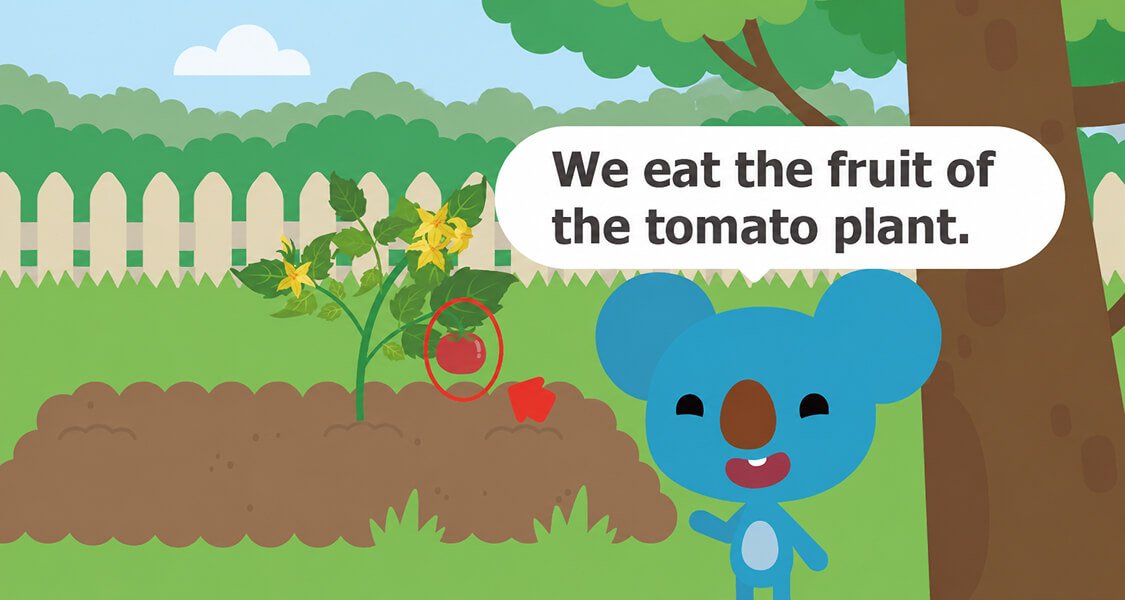
In a Vegetable Field
Identify parts of a plant and know which part of the plant we can eat.
Vocabulary: plant, leaf, seed, root, stem
Sentence: We eat the (fruit) of a tomato plant.
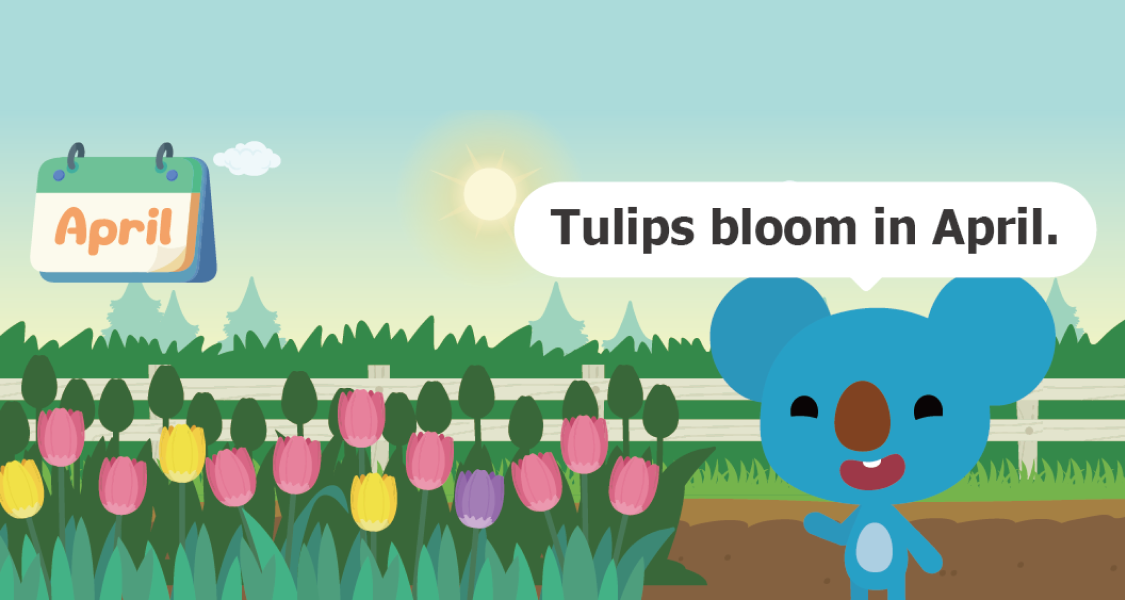
The Growth of a Peach Tree
Talk about the life cycle of plants.
Vocabulary: sprout, grow, bloom, die
Sentence: (Lilies) (sprout) in (spring). (Apple trees) (bear fruit) in (fall).
By the end of level 5, students will be able to:
- 1Describe the names and symptoms of illnesses and give health advice
- 2Describe movie and TV genres and discuss preferences
- 3Assess animals’ survival conditions and discuss conservation plans
- 4Make and discuss holiday plans
Sample Lessons from This Level
National Animals
Identify countries and describe their representative animals.
Vocabulary: Egypt, Indonesia, Kenya, Russia
Sentence: (Pandas) live in (China).
Different Landscapes
Review vocabulary on landscapes and acquire two more words of landscapes.
Vocabulary: jungle, savannah
Sentence: /
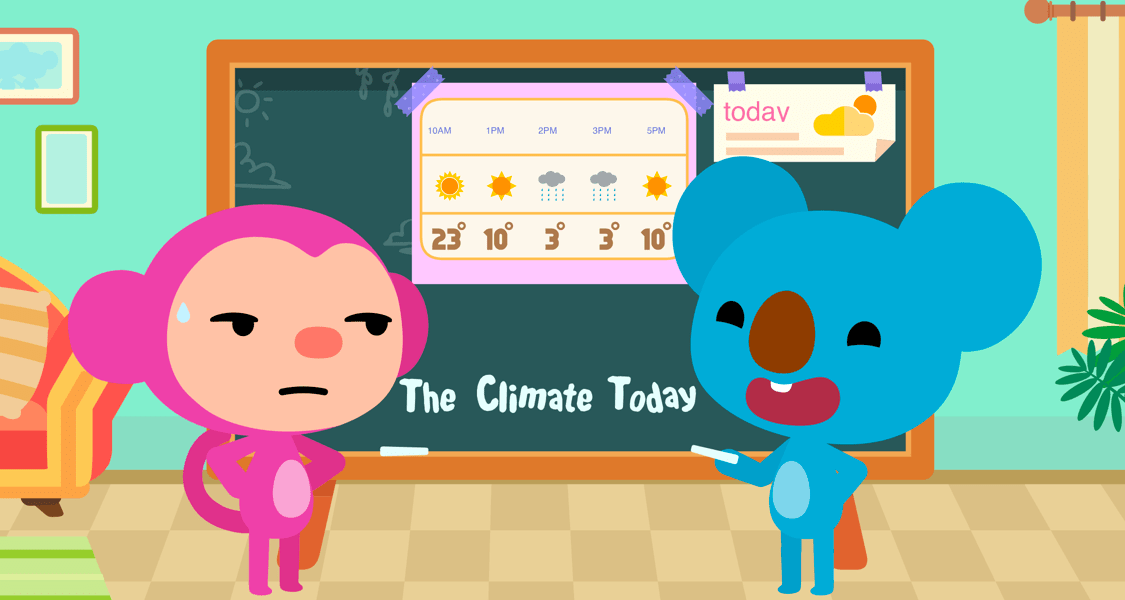
What's the Temperature?
Talk about temperature and predict the temperature.
Vocabulary: minus, temperature, degree Celsius
Sentence: /
Climate and Weather
Learn to use adjectives to describe the climate.
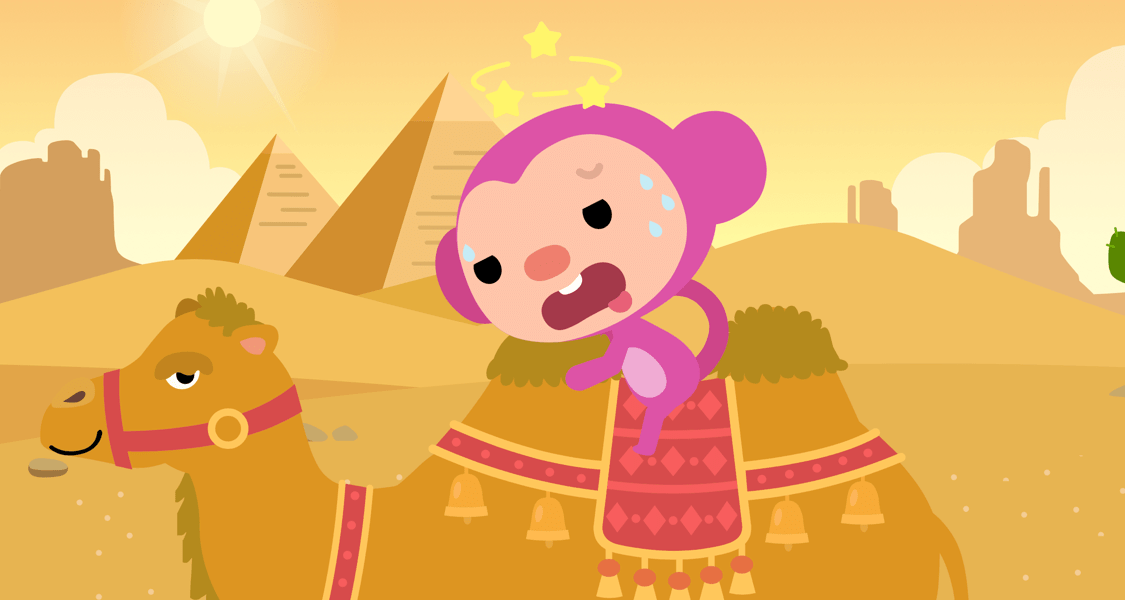
Vocabulary: dry, humid, climate
Sentence: What's the climate like?
By the end of level 6, students will be able to:
- 1Learn vocabulary about countries, landforms, clothing, and climate.
- 2Describe daily activities using the simple past and apply various tenses.
- 3Compare past and present living environments and lifestyles
- 4Learn about major Western holidays and traditions, and describe their customs.
Sample Lessons from This Level
Length and Height
Learn the concept of "centimeter" and use "how long" and "how tall" questions to ask about the size of an animal.
Vocabulary: centimeter
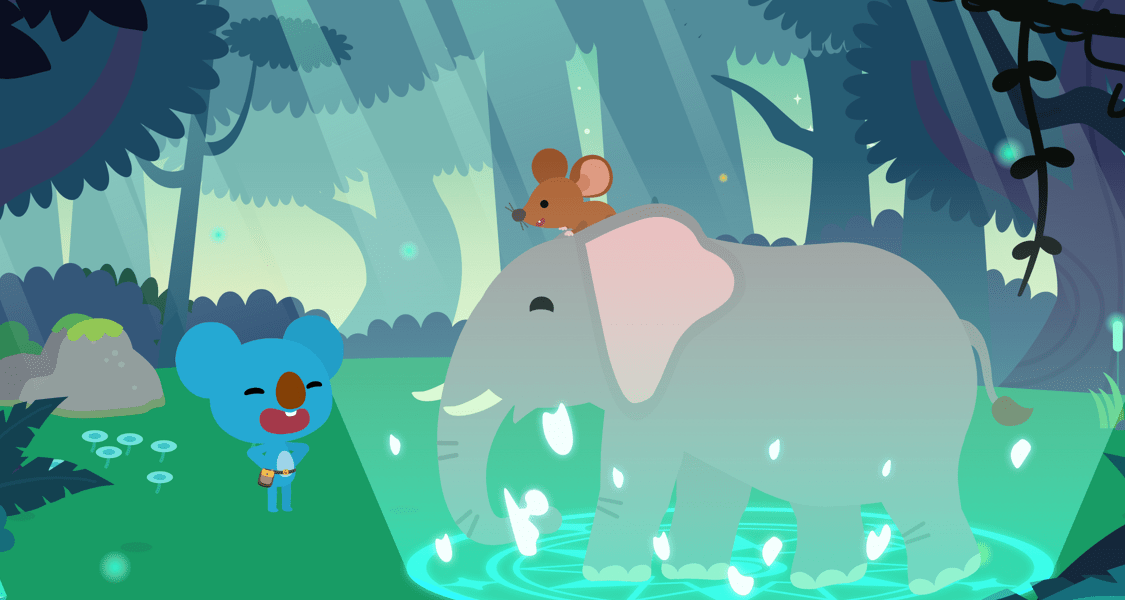
Sentence: How tall is the elephant?
Who's the Fastest?
Learn to respond to "how fast" questions and describe the speed of animals.
Vocabulary: cheetah, dolphin, hare, sloth
Sentence: (A hare) can run at 80 kph.
Flee from the Lion
Use the "how fast" question to ask about speed of different animals.
Vocabulary: ant, spider
Sentence: How fast can (it) run/fly/move/swim?
Animals' Weight
Use units of weight to describe animals' weight.
Vocabulary: gram, kilogram, ton
Sentence: (The sloth) weighs (four kilograms).
By the end of level 7, students will be able to:
- 1Compare the sizes and speeds of animals
- 2Compare the area, population, and landscapes of cities and countries
- 3Compare the pros and cons of city facilities, evaluate them, and make decisions
- 4Retell fairy tales and short stories, and evaluate their plots and characters
Sample Lessons from This Level
Illnesses
Talk about illnesses.
Vocabulary: earache, faint, ankle, allergy
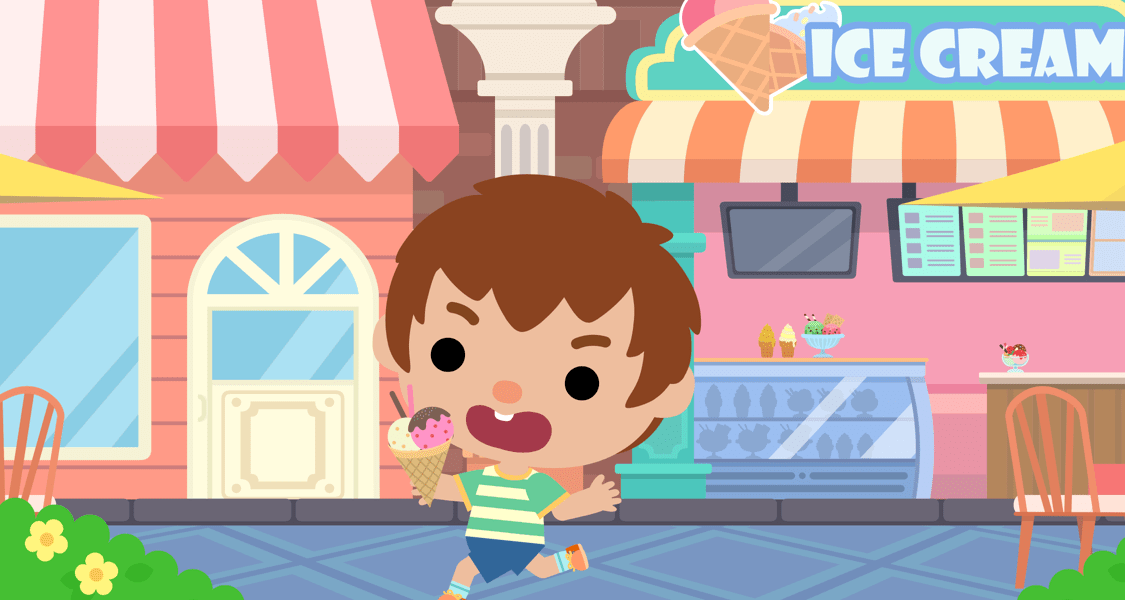
Sentence: I got a (stomachache) while (I was eating ice cream).
Treatments for Illnesses
Talk about treatments for certain illness.
Vocabulary: ice pack, ear drops, bandage, injection
Sentence: He gave (an ice pack) to Jack.
Health Check-up Procedures
Talk about the procedures of a yearly check-up in future tense.
Vocabulary: measure one's height, measure one's weight, take a chest X-ray
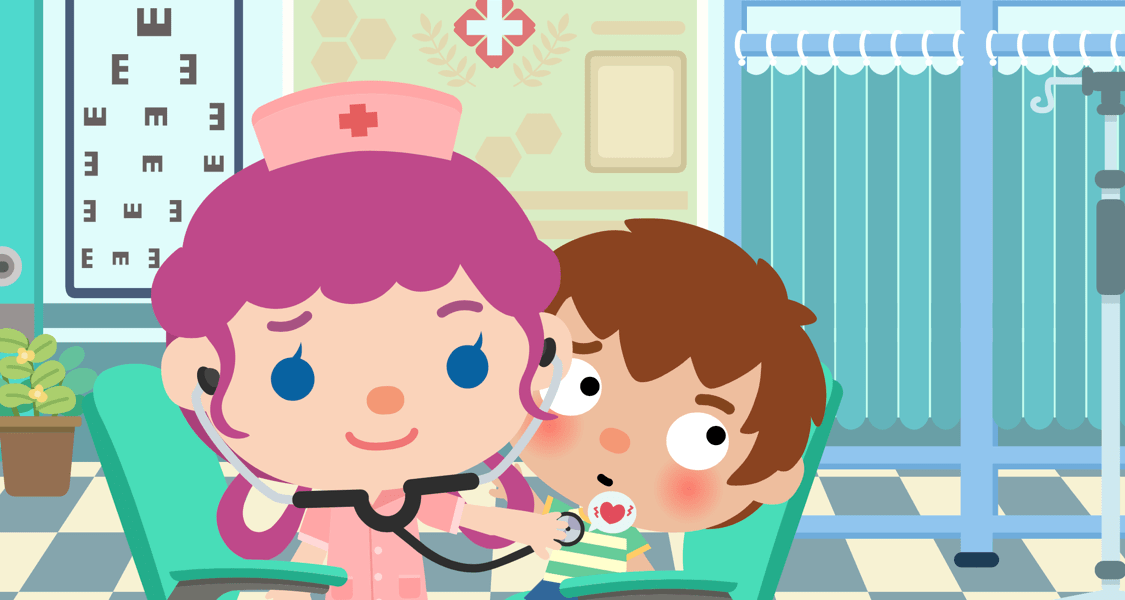
Sentence: The nurse will (measure your height and weight).
Healthy Habits
Talk about healthy habits with gerunds.
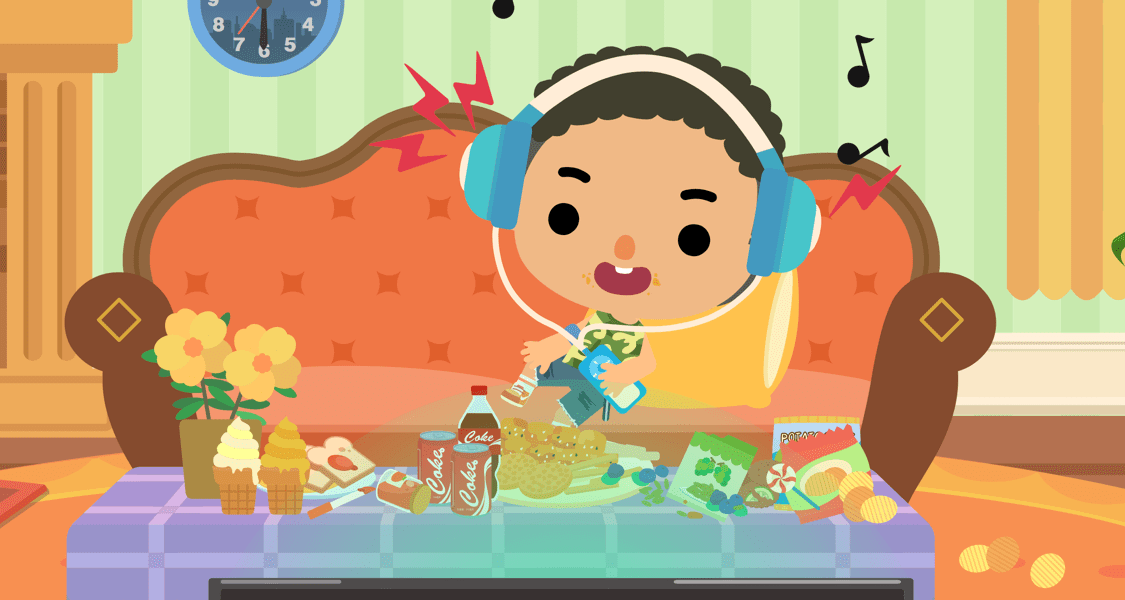
Vocabulary: stay up late, read in the dark, skip meals
Sentence: (Having meals regularly) is good for you.
By the end of level 8, students will be able to:
- 1Describe the materials and how things are made
- 2Make inferences and predictions based on clues
- 3Describe, analyze, and explain phenomena
- 4Write practical texts such as lost-and-found notices
Sample Lessons from This Level
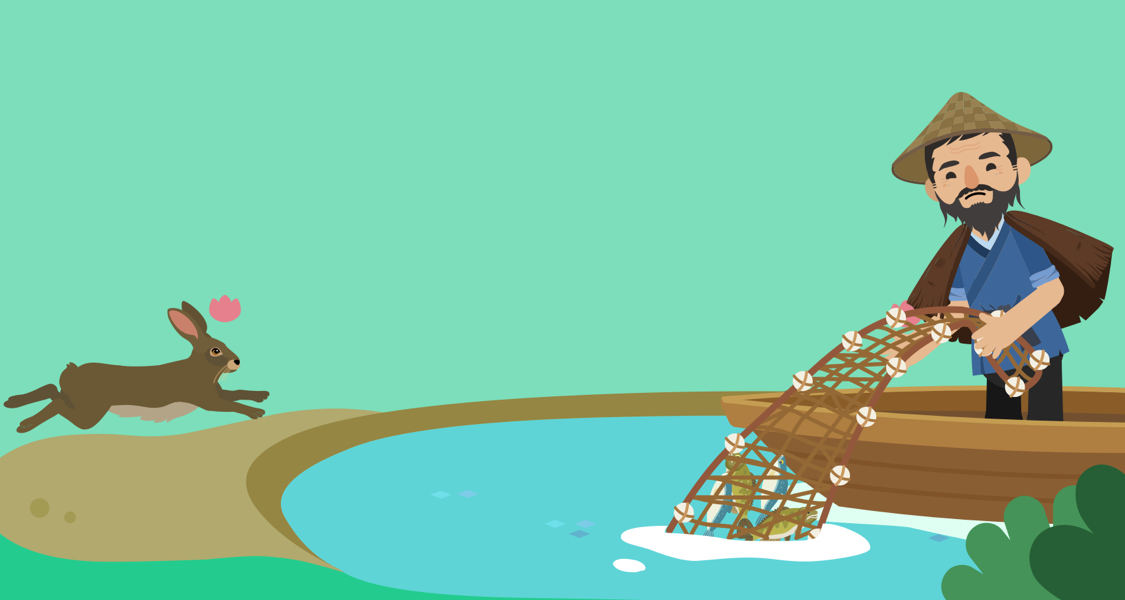
Peach Blossom Village
Introduce object clauses.
Vocabulary: mountain, pavilion, crane, surround
Sentence: The book says that (a fisherman visited the Peach Blossom Village).
An Adventure Record
Reinforce object clauses and talk about preparation for adventures.
Vocabulary: explorer, copy, temple, think
Sentence: He thinks that (he should pack his jacket).
Visiting Peach Blossom Village
Use object clauses to describe what someone sees and feels.
Vocabulary: fence, cottage, willow, strange
Sentence: Jack saw that (ducks swam in the lake).
Rumors
Use object clauses to describe rumors.
Vocabulary: monster, attack, rumor, frightened
Sentence: The rumor says that (the monster can breathe fire).
By the end of level 9, students will be able to:
- 1Report on news events
- 2Summarize classic literary works
- 3Report on task completion
- 4Report what others have said and relay information
Sample Lessons from This Level
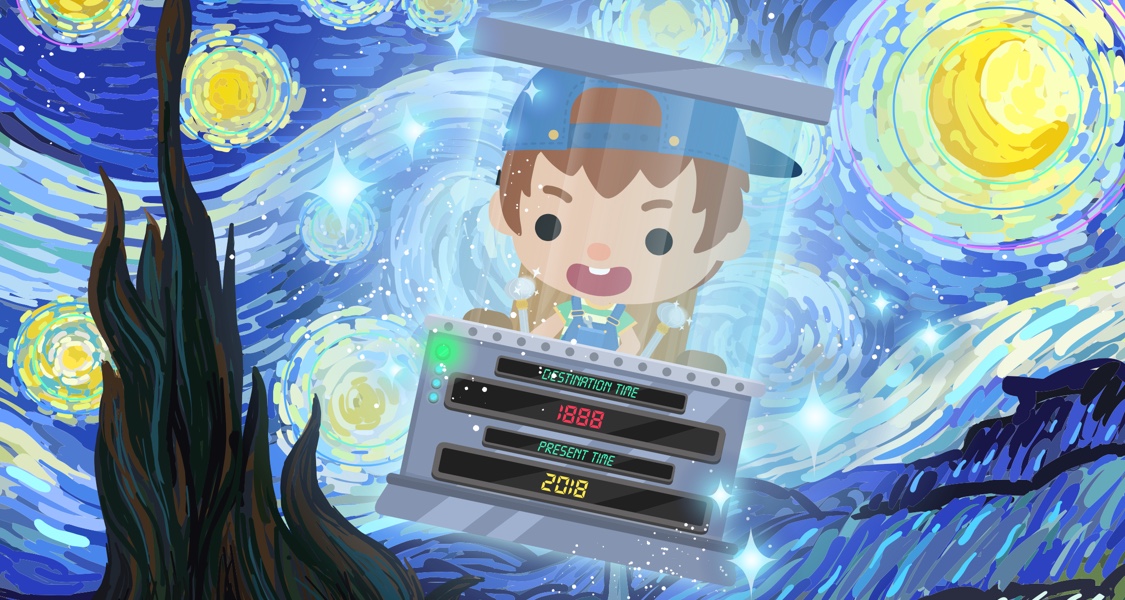
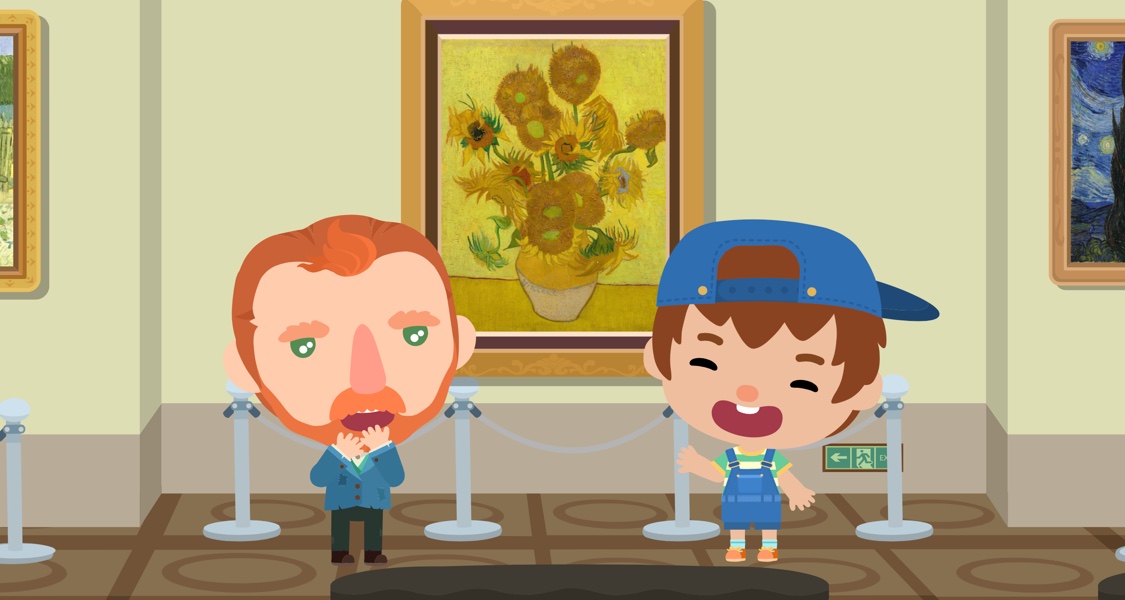
Vincent Van Gogh
Introduce attributive clauses and describe the life story of the painter Vincent van Gogh.
Vocabulary: Netherlands, France, church, minister
Sentence: Van Gogh was a great painter who (was born in Netherlands).
Beloved Van Gogh
Reinforce attributive clauses and describe great artworks by Vincent van Gogh.
Vocabulary: depict, swirl, auction, artists
Sentence: The Starry Night, which (depicts a night sky), is one of Van Gogh's famous paintings.
Edgar Degas
Reinforce attributive clauses and talk about the life story and artworks of the painter Edgar Degas.
Vocabulary: observe, Italy, ribbon, reflect
Sentence: He was a painter who (was born in a rich family).
Claude Monet
Use attributive clauses to describe the life story and artworks of the painter Claude Monet.
Vocabulary: focus, criticize, reject, oil paint
Sentence: His mother (who was a singer) supported him to pursue his dream.
By the end of level 10, students will be able to:
- 1Understand the text and identify key details
- 2Analyze the text structure
- 3Engage in topic discussions and debates
- 4Deliver a topic-based speech
Sample Lessons from This Level
The Importance of Food
Talk about ways of obtaining food and analyze the importance of food.
Vocabulary: repair, skin, muscle, culture
Sentence: Fruit provides (human bodies) with (Vitamin C).
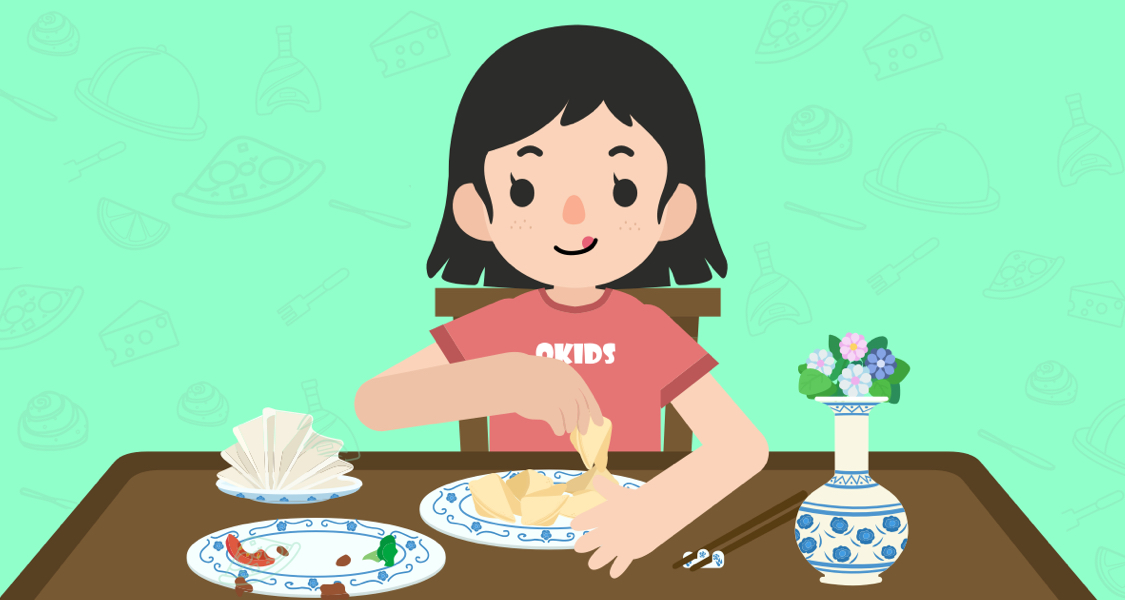
Eating Habits in Different Cultures
Compare the cultural differences in eating habits.
Vocabulary: conversation, polite, utensils, habits
Sentence: It is impolite to (talk during a meal).
Food culture around the world
Learn about American Chinese food and the reasons why it is popular in America.
Vocabulary: combine, tradition, diverse, memory
Sentence: (Some people) insist that (fortune cookies and orange chicken are not real Chinese food.)
Why People Like Fast Food Restaurants
Analyze and talk about why American fast food restaurants are popular.
Vocabulary: calorie, risk, exotic, adapt
Sentence: (The police) risked his life (to save the girl.)
By the end of level 11, students will be able to:
- 1Read articles on a variety of topics
- 2Master reading strategies
- 3Create mind maps
- 4Discuss and debate the text
Sample Lessons from This Level
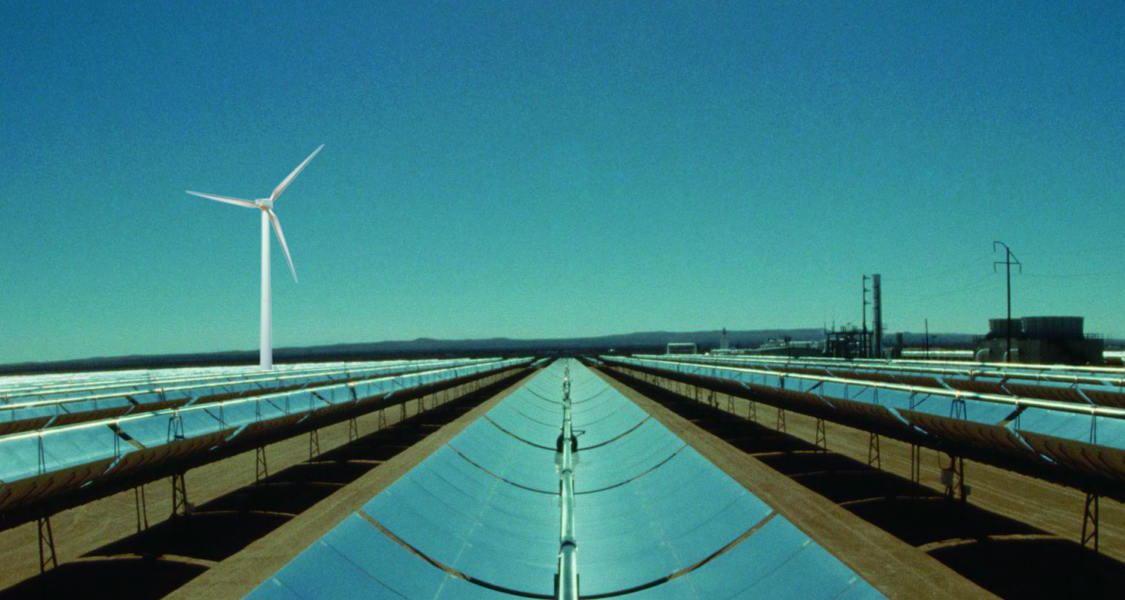
Alternative Energy
Learn about fossil fuels, and acquire the types and features of alternative energy sources.
Vocabulary: water power, fossil fuels, nuclear power
Sentence: (Dams can be used to move water to) where it is needed.
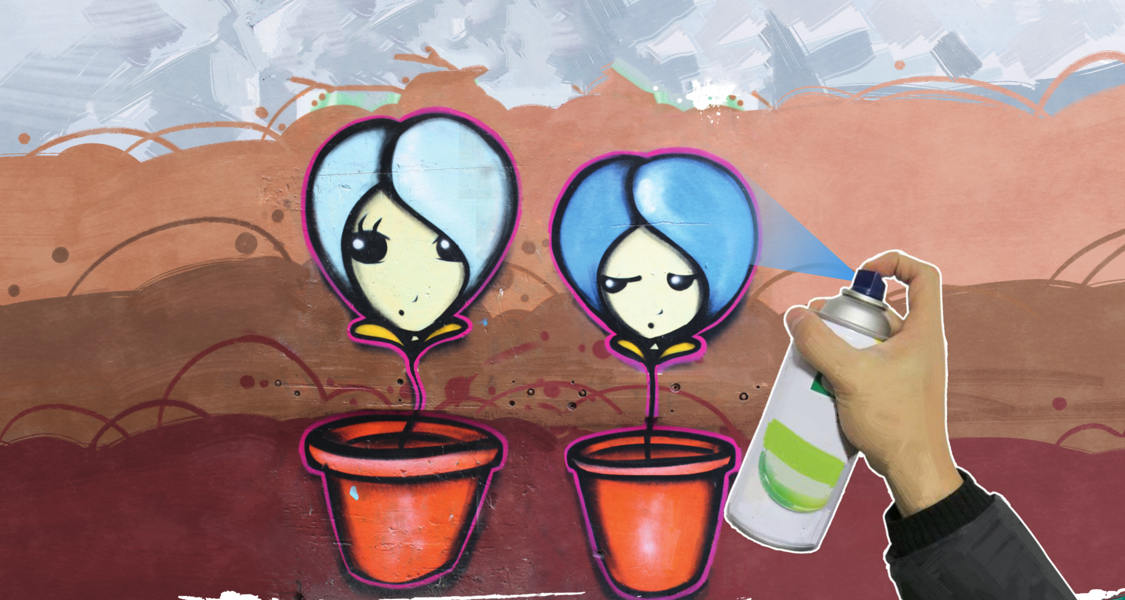
Street Art
Learn about street art and discuss the significance of its existence.
Vocabulary: public, graffiti, legal, run-down
Sentence: They don’t believe (that art should only be shown in special places).
The History of Money
Learn about the history of money and acquire different types of money.
Vocabulary: metal, barter, community, scale
Sentence: The strongest metals (used) were gold and silver.
Animal Hospital
Learn about veterinarians and vet nurses, and discuss animal treatment and care.
Vocabulary: drip, operation, cage, intensive care
Sentence: (The animal goes to) intensive care, where it is closely looked after by the nurse.
By the end of level 12, students will be able to:
- 1Intensive Reading, Listening and Speaking
- 2Complete learning tasks using a variety of audio-visual materials
Sample Lessons from This Level